




The Story of a Hospital Leader
Picture a hospital professional responsible for digital engagement and CRM operations. This individual has spent more than fifteen years working across healthcare marketing, physician relations, and data-driven outreach. Their day involves constant coordination with IT, clinical operations, compliance, and finance. They understand how data shapes communication strategies, although they often rely on other departments to update systems or resolve errors.
Their environment is familiar across many hospital systems. Decision-making moves slowly. Provider information lives in several systems that rarely align. No single group is fully responsible for maintaining accuracy. This leader feels persistent pressure to keep directories updated, support clinical outreach, and produce reports leadership can trust. They are also keenly aware that outdated or inaccurate provider data can create confusion for both clinicians and patients. Expectations for precision continue to rise as clinical initiatives rely more heavily on streamlined communication and reliable CRM data.
The Current Challenges Hospitals Face
These challenges mirror those seen across the industry. Provider directories do not always reflect current practice locations or specialties. CRM systems need regular manual cleanup to stay usable. Visibility into which physicians engage with digital outreach is inconsistent. IT teams carry large backlogs, delaying even minor adjustments. Coordinating a simple update can involve several approvals and multiple teams.
These gaps disrupt referral development and slow communications meant to drive service line growth. When data is inconsistent, internal teams begin to question the accuracy of outreach lists and reports. Physicians become frustrated when their information is incorrect or messaging from health systems lack personalization. Leadership grows cautious about investing further in digital engagement. Although the team is capable and strategic, data friction creates barriers that are difficult to overcome.
Why HealthLink Profile Matters for Hospitals
Hospitals achieve stronger engagement when they start with accurate and complete provider data. HealthLink Profile creates a unified provider identity that supports every downstream touchpoint.
-
Practitioner and Facility Demographics: Reliable demographic and credentialing details keep directories accurate and give outreach teams confidence that they are working from correct information.
-
Healthcare Networks and Affiliations: Clear visibility into system and practice relationships helps teams understand referral patterns and develop more meaningful communication strategies.
-
Email Addresses: Accurate, continuously verified email addresses allow hospitals to distribute service line updates and targeted clinician campaigns with confidence.
-
Digital Identities: Digital identifiers link each provider across email, programmatic advertising, and paid social, enabling consistent activation across channels.
-
Claims Insights: Claims-based insights allow segmentation based on clinical behavior, helping teams tailor outreach to specific procedures, diagnoses, or prescribing patterns.
Together, these components provide a reliable foundation for more aligned and effective communication efforts. For a real example of how cleaner data and smarter provider insights can transform outreach, explore how UCSF Health improved engagement and operational efficiency in this case study:
https://healthlinkdimensions.com/case-studies-and-webinars/case-study-ucsf-health.
How HealthLink Supports Hospital Data and Outreach Needs
Hospitals aim to increase physician engagement, maintain accurate provider information, improve reporting credibility, and support clinical initiatives with timely communication.
HealthLink’s Profile solutions help teams meet these goals. They reduce manual data cleanup, lower the risk associated with outdated directories, support more relevant segmentation, and strengthen the accuracy of leadership reporting.
The shift is noticeable. Instead of spending hours validating records or tracking down changes across departments, teams gain a single, reliable source of provider information. Outreach lists become more precise. Directories stay more consistent. Performance metrics reflect better data inputs. Hospitals become better equipped to communicate effectively with their physician communities and more confident in the accuracy of their operational systems.
Rebuilding Healthcare Marketing on Solid Ground
HealthLink’s four product families are purpose-built to support the entire data lifecycle. Profile establishes the provider identity. Enrich fills data gaps and validates network directories. Engage powers omnichannel outreach to physicians and advanced practice providers. And Pulse delivers the reporting needed to evaluate performance.
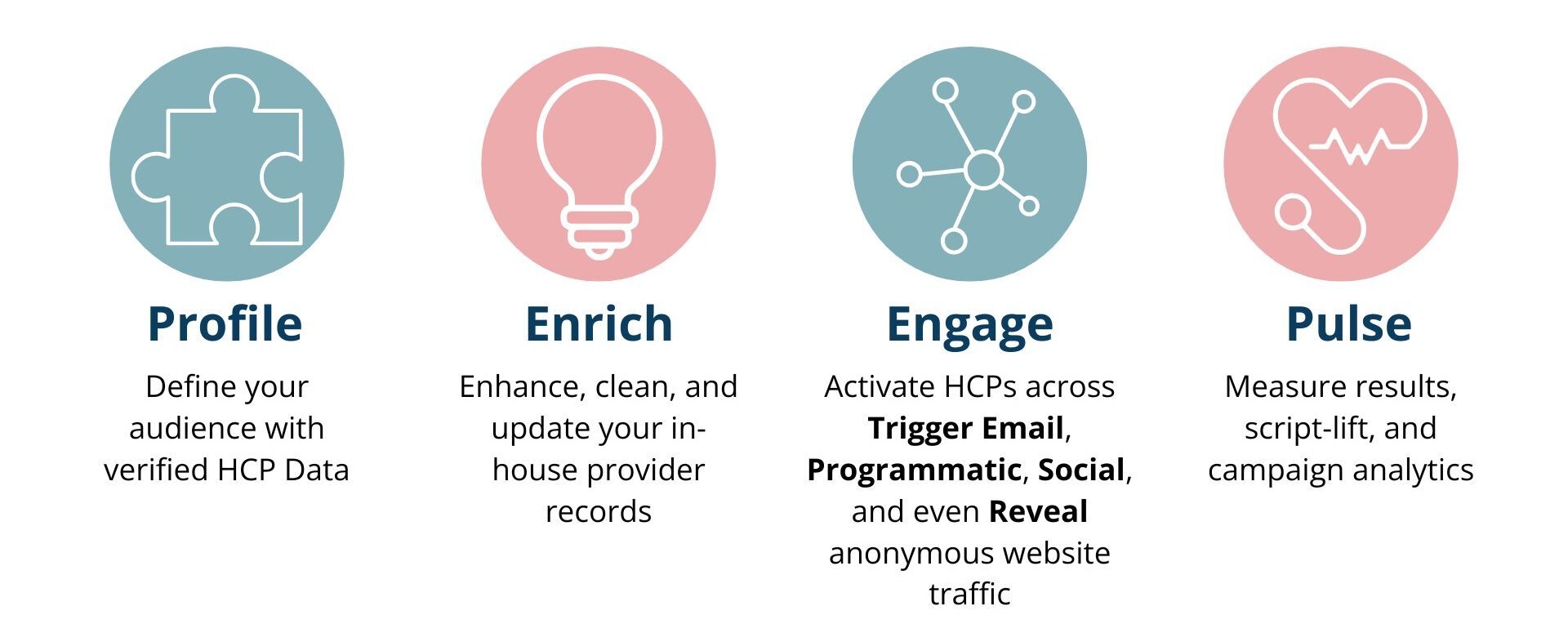
When these components work together, teams reduce internal friction, move faster, and gain clarity. Outreach becomes more targeted and aligned with service line goals. Reporting becomes more precise and credible. Hospitals ultimately strengthen relationships with physicians by building communication strategies on reliable, well-maintained data.