
For more than a decade, HealthLink's Physicians Communications Report has explored physicians’ preferences for communications from healthcare marketers. This year, we took a closer look at physicians’ use of AI and its growing role in healthcare marketing for this special supplemental section of the report.
THE PREMISE
The full report set the baseline. This edition goes further on AI alone.
The full report found that 74% of physicians use at least one AI tool for clinical information, with ChatGPT leading adoption. This AI-focused edition builds on those findings with additional insights into how physicians use AI, which tools they prefer, and how they evaluate AI-generated information.
Among AI users, physicians rely on an average of 2.3 tools, and 36% routinely verify AI-generated information against trusted sources. AI search is also becoming an important resource, with 25% of physicians using it for product and disease information. However, AI adoption is not universal: 26% of physicians report using no AI tools or are unsure whether they do.
All findings come directly from survey responses or calculations based on survey counts. Percentages reflect all 896 respondents unless a smaller respondent group is specified.
FINDING 1
Which AI tools do physicians use?
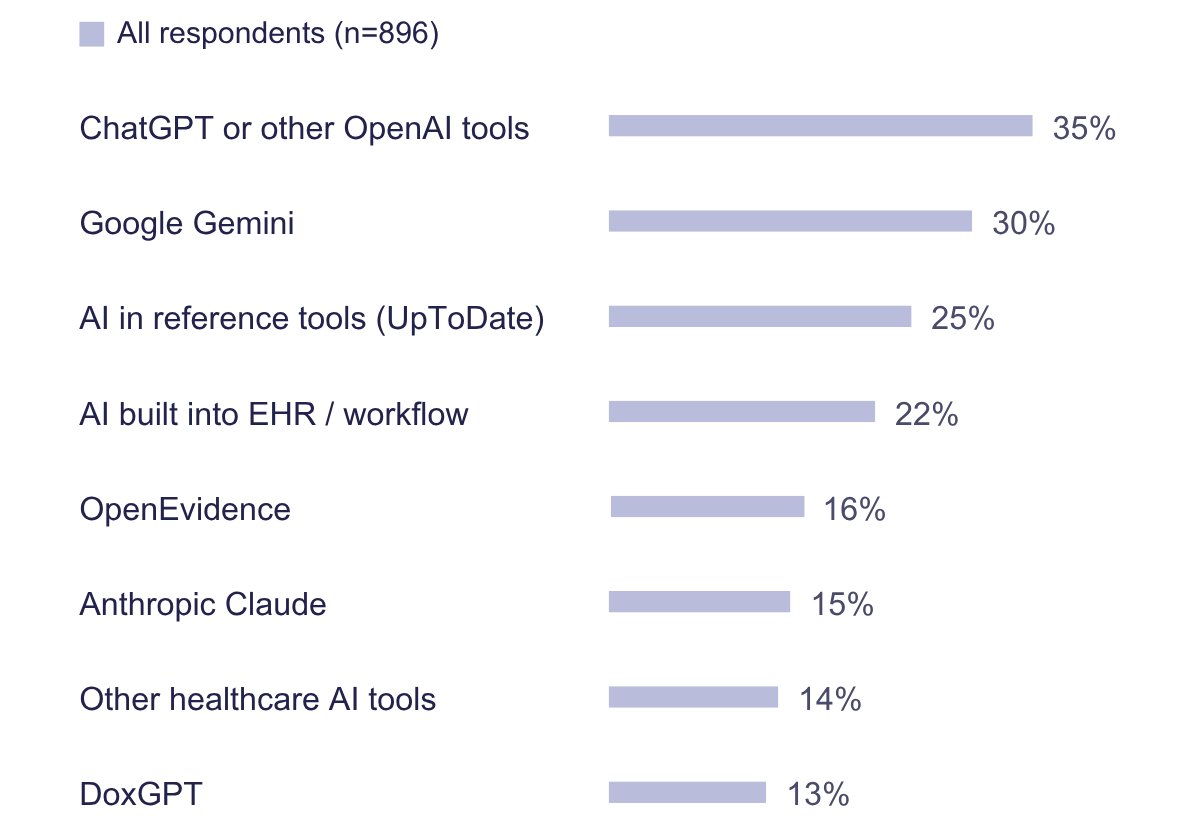
ChatGPT or other OpenAI tools are the most-used AI tool among physicians, reaching 35% of all respondents and 48% of AI users. Google Gemini follows at 30% and 41%. AI built into reference tools such as UpToDate reaches 25% of all respondents and 34% of AI users, and AI built into the EHR reaches 22% and 30%. Healthcare-specific tools reach a smaller share: OpenEvidence 16% and 21%, Anthropic Claude 15% and 20%, other healthcare AI tools 14% and 19%, and DoxGPT 13% and 17%.
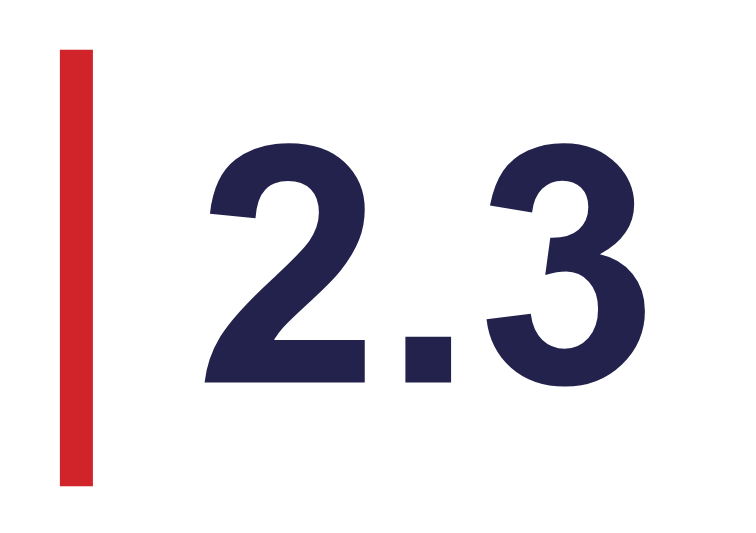
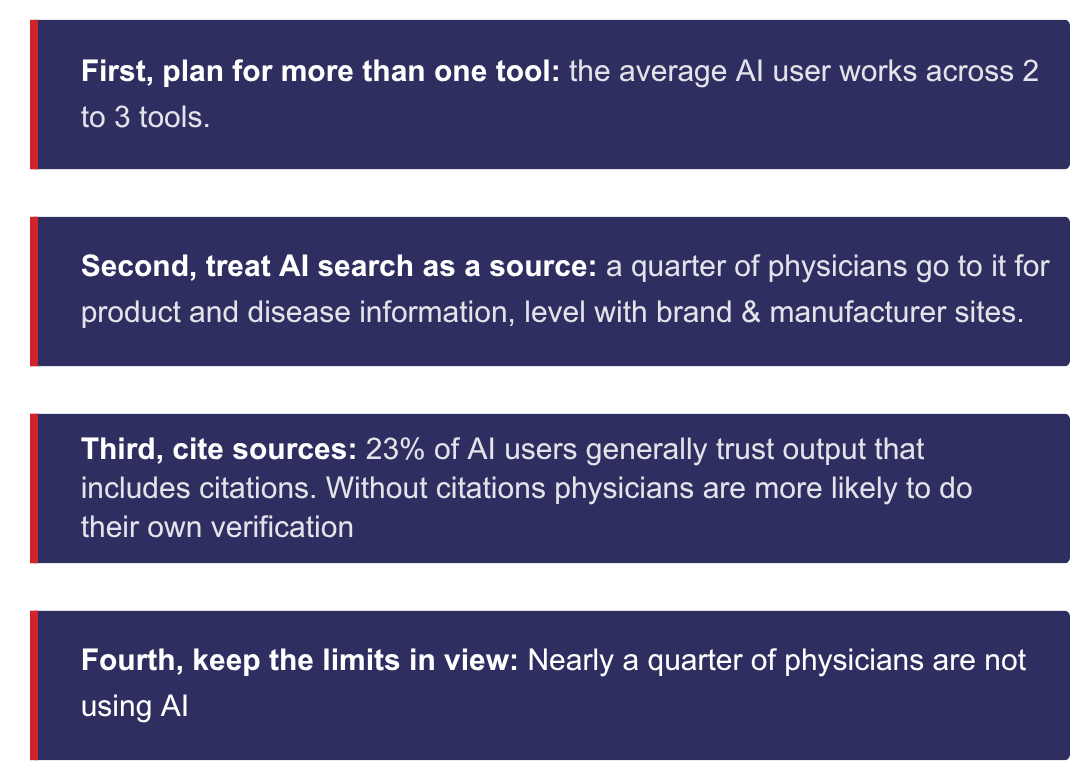
Physicians who use AI use about 2.3 tools on average. No single tool reaches a majority of AI users: ChatGPT is highest at 48%.
FINDING 2
Do physicians turn to AI search for product and disease information?
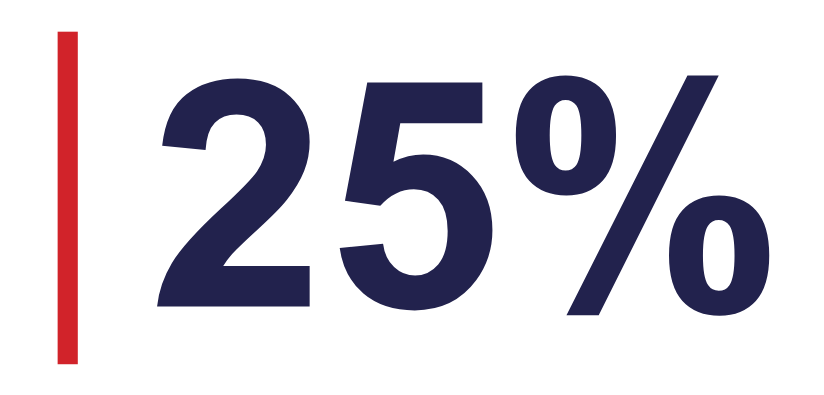
Go to AI-enabled search or summarization tools. Level with manufacturer sites and PubMed.
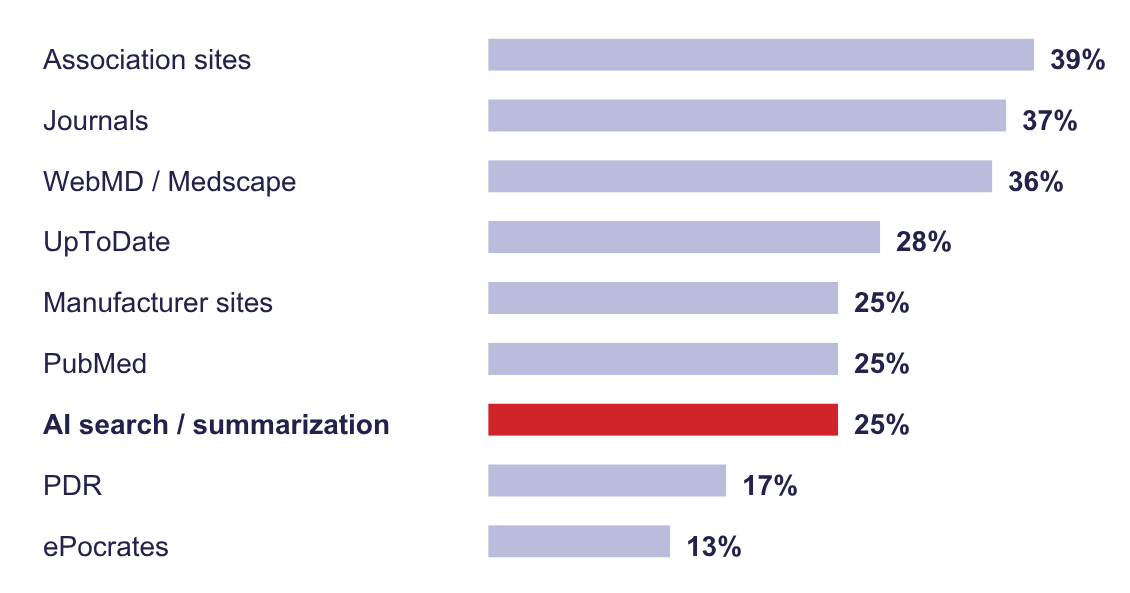
Twenty-five percent of physicians use AI-enabled search or summarization tools for healthcare product information or disease education, matching the use of manufacturer sites (25%) and PubMed (25%). Association sites (39%), medical journals (37%), and WebMD or Medscape (36%) remain the most popular sources, followed by UpToDate (28%).
These findings show that AI search has become as widely used as manufacturer sites and PubMed for product and disease information, surpassing PDR (17%) and ePocrates (13%).
FINDING 3
Do physicians verify what AI tells them?
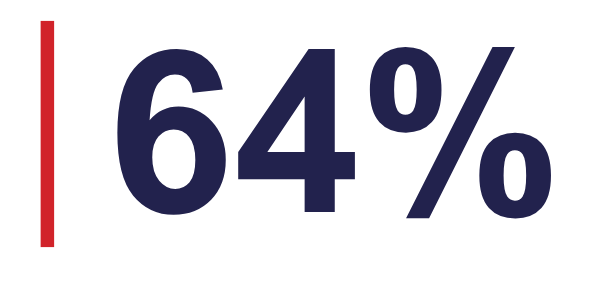
of AI users do not verify by default.
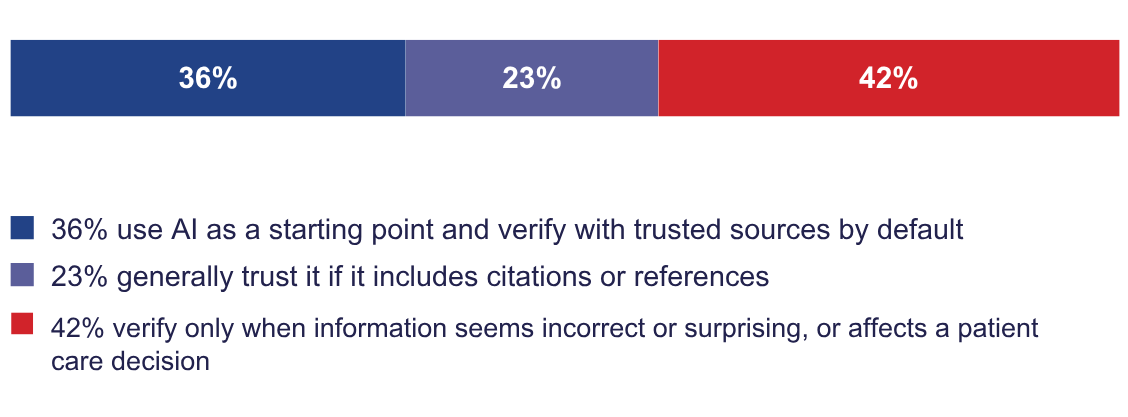
Among 672 respondents who described how they handle AI output, 36% routinely verify information with trusted sources. Another 23% generally trust AI responses that include citations or references, while 42% verify only when information seems incorrect or surprising (22%) or affects a patient care decision (20%).
While 64% do not verify AI-generated information by default, this does not mean they never verify it. Many take a more selective approach, checking information when accuracy or patient care decisions warrant closer attention.
FINDING 4
How many physicians do not use AI?
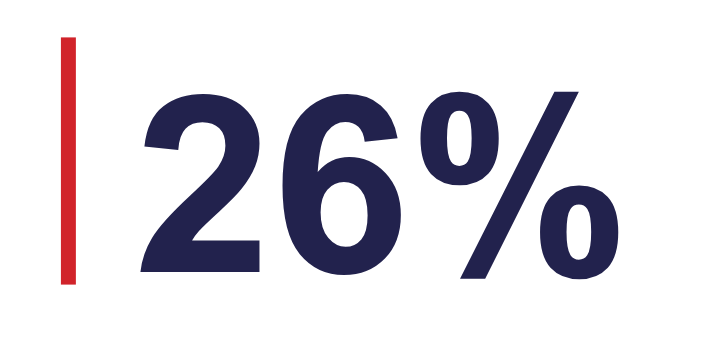
do not use AI tools for clinical research (19%) or are not sure (7%).

Twenty-six percent of physicians either use no AI tools (19%) or are unsure (7%). A separate question found that 18% generally do not use AI for clinical information.
Overview
The survey supports four points.
FAQ
What percentage of physicians use AI for clinical information?
74% use at least one AI tool for clinical research, medical information, or professional guidance, and 19% use none. A further 7% are not sure (HealthLink Dimensions 2026 survey, n=896).
How many AI tools do physicians use?
Physicians who use AI use about 2.3 tools on average, calculated from 1,523 tool selections across 661 AI users. ChatGPT is used by 48% of AI users and Gemini by 41%.
Do physicians verify AI-generated clinical information?
36% of AI users treat AI output as a starting point and verify with trusted sources by default. Another 23% generally trust output that includes citations, 22% verify only if it seems incorrect, and 20% only if it affects a patient care decision.
Do physicians use AI to look up product and disease information?
25% go to AI-enabled search or summarization tools for healthcare product information or disease education, level with manufacturer sites and PubMed.
Who Responded
The sample leans hospital-based and early-career. By specialty, primary care is 21%, dermatology 11%, cardiology 9%, and emergency medicine 7%, across 18 categories, several too small to cut by. By practice setting, hospital is 41%, outpatient office or clinic 29%, urgent care 13%, telehealth 8%, and academic or research 7%. By years in practice, 6 to 10 years is 36% and 0 to 5 years is 34%, so 70% have 10 years or less.
ABOUT
HealthLink Dimensions
HealthLink Dimensions helps healthcare marketers reach and engage clinicians with accuracy and respect. Our verified provider data and engagement solutions span the physician audience across email and programmatic channels, built on a privacy-compliant foundation.
For more than a decade, HealthLink Dimensions has published its Physician Communications Report to help healthcare marketers better understand physicians’ communication preferences. By bringing together survey findings and first-party engagement insights, the report offers useful perspectives to help marketers shape their strategies and develop more relevant communications.